
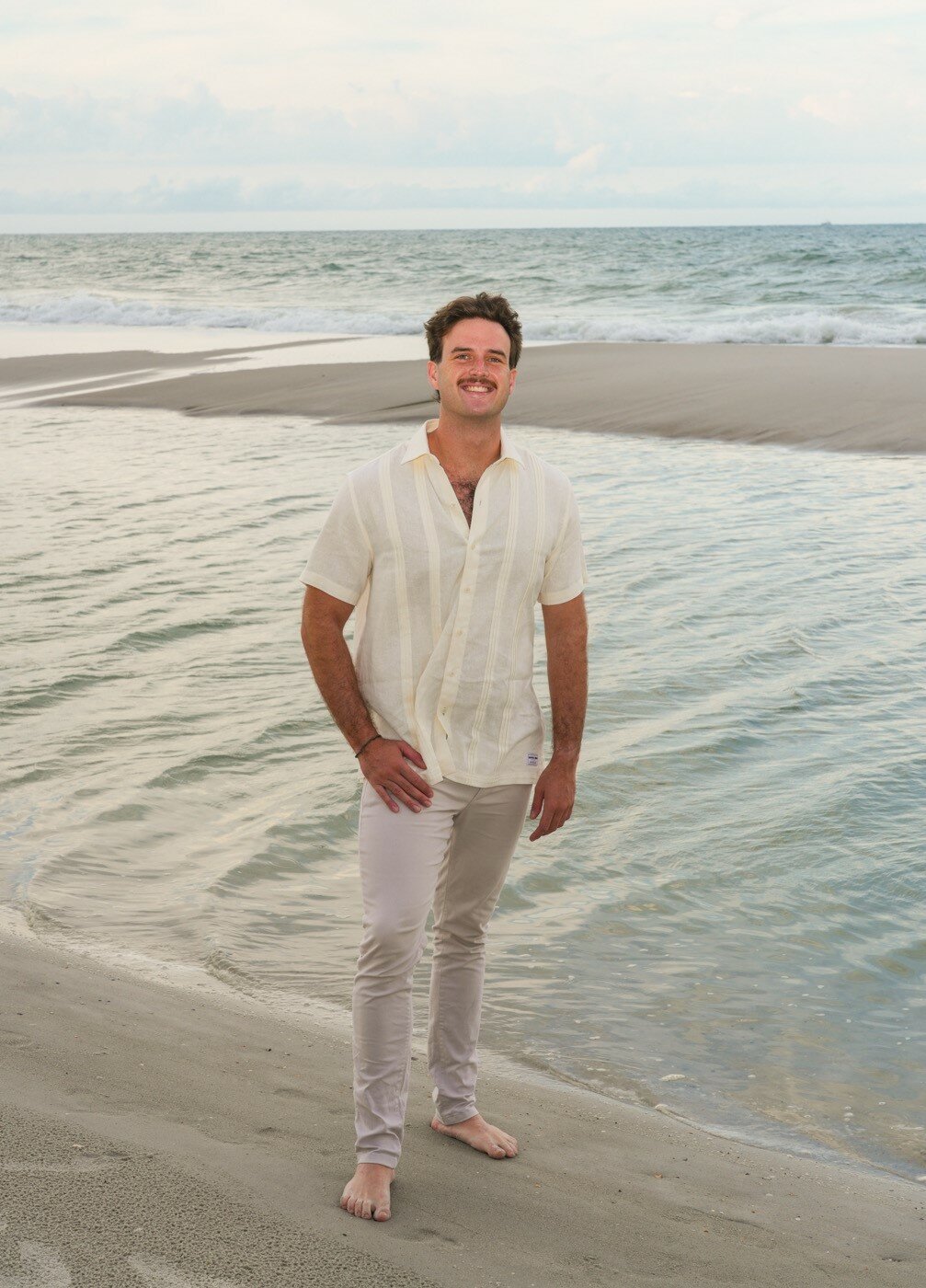
When Christopher Forbes was in his senior year at Providence College in Rhode Island, he was considering the next chapter of his life.
He’d majored in international studies and was considering a career in corporate social responsibility, helping corporations reduce their environmental impact, for which he hopes to attend graduate school.
But he’d also studied Spanish and wanted an opportunity to become more fluent. That might require living, at least for a time, in a Spanish-speaking country.
Then, a friend suggested the Peace Corps, which was new to him.
“I didn’t know what the Peace Corps was at all,” he said.
Once he saw the organization’s website, he was sold. He applied, went through the interview process and, in September 2023, he went off to the country he’d chosen: Paraguay.
Recently, while sitting in the Ponte Vedra Beach home of his mother, Barbara Forbes, he described the 33 months he’d spent in the South American nation, an experience he calls “amazing.”
After 12 weeks of training, he went to live with his host family in Pirayú, located in the southern portion of Paraguay.
The majority of his time there was part of a cultural exchange, with the rest devoted to a work requirement. He was placed in a school with about 600 students, where he taught composting, planting trees and other lessons. After about four or five months, he moved on to a different school. Working at one of the schools, he had to make a seven-mile roundtrip bike ride three days a week.
But the work requirement was not burdensome. He only worked about 25 hours a week.
The cultural exchange aspect, perhaps, offered greater satisfaction. In fact, when he’d completed his initial tour, Forbes extended his stay and worked in the Paraguayan government.
Part of the appeal was the language of the people. In addition to Spanish, they speak Guaraní, the indigenous language.
“That’s actually what drew me to Paraguay,” he said. “Everyone’s bilingual — but it’s a type of bilingualism that, it’s not like: They know this language and they know that language. They mix them, so it’s pretty cool.”
In an effort to become more integrated, Forbes offered to teach English to willing students.
“Only like 15 kids showed up, and they were so scared of me,” he said. The only American in town, he was different, he was taller than everyone else and he had an accent.
His efforts paid off. He made many friends, not just among the Peace Corps volunteers, but also among the Paraguayans, with whom he has maintained contact.
“I still text my host mom,” he said. “It was just an amazing experience to have lived with them. We had lunch and dinner together every day. They were amazing people.”
Living there, he learned a lot about himself, developed the kinds of soft skills that employers value and boosted his confidence. He learned to stand before an audience and give a presentation without the usual anxiety.
“I totally learned how to walk into a new setting and not really care what people think,” he said, adding that he was grateful to have made this breakthrough, so elusive for many, even polished professionals.
Paraguay itself proved interesting. The weather was hotter even than Florida and, when the temperature hit 104 degrees and the humidity was 80%, the available water supply could get strained.
The people, Forbes said, were “super welcoming.”
“If you’re a stranger, people want to help you,” he said. “They’d even invite you in for food.”
In the town where he stayed, no one had doorbells. Visitors would stand outside a home and clap their hands.
“I saw that as friendly and open,” Forbes said.
He said he highly recommends students consider volunteering with the Peace Corps, even if they have a career planned.
“It’ll be there when you get back,” he said. “And if you’re just out of college, you’ll be young when you get back.”
Calling it a great experience, he said, “I don’t know how everyone doesn’t want to do it.”


