

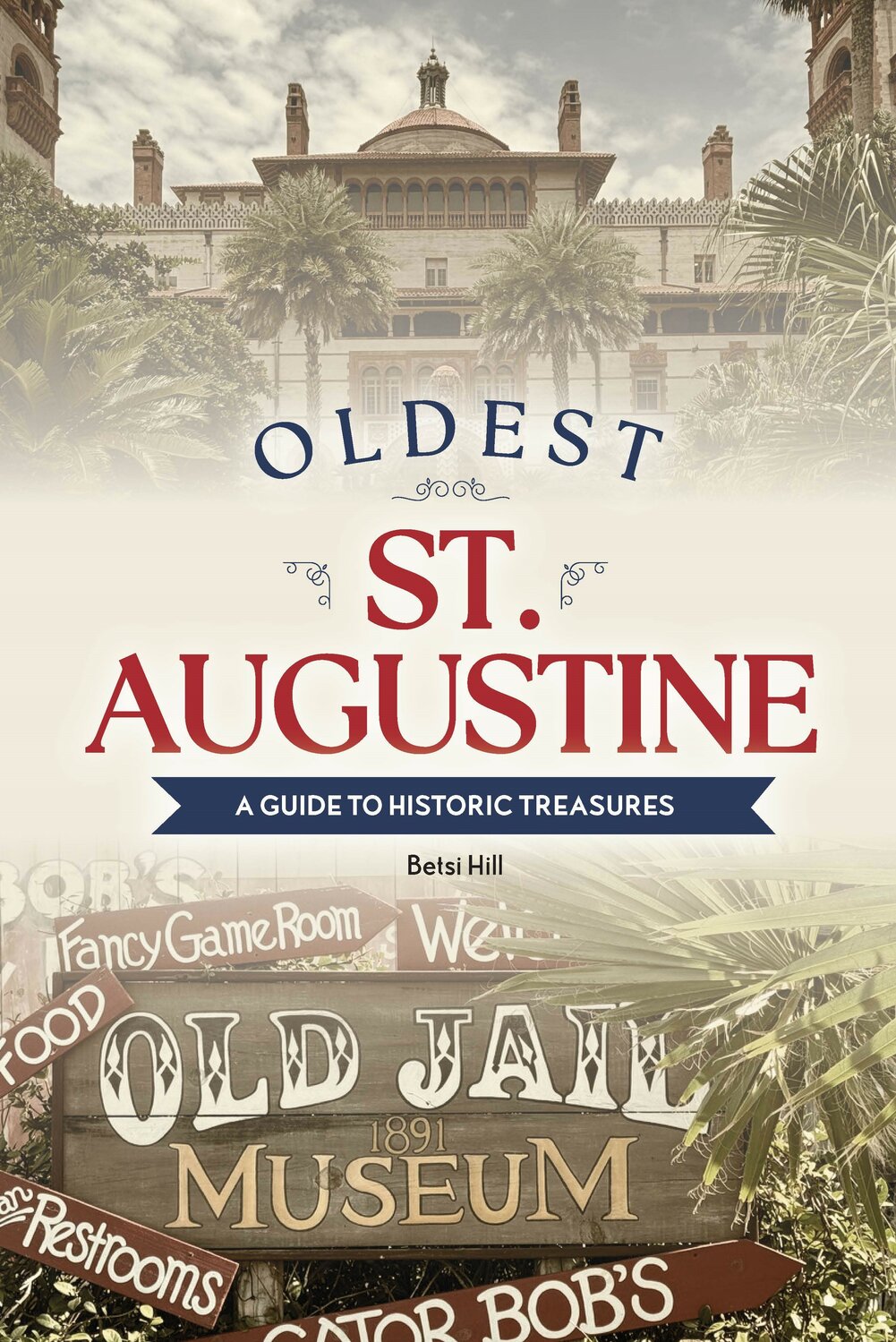


Some books explain a place. Others invite you to fall in love with it.
“Oldest St. Augustine,” the latest work by author Betsi Hill, does the latter. It isn’t a traditional history book, and it isn’t quite a memoir either. Instead, it reads like a long conversation with a city that has spent more than four centuries quietly collecting stories — and finally found someone willing to listen.
The book arrives as the United States approaches the 250th anniversary of the Declaration of Independence, yet the milestone feels almost incidental. Hill didn’t write this book because of an anniversary. She wrote it because St. Augustine whispered to her — the way old cities sometimes do — and she couldn’t ignore the call.
Rather than offering a linear timeline, Hill guides readers through the city’s oldest places, allowing the past to unfold naturally beneath their feet. Its history is told through doorways, streets and rooms — the kind you feel as much as you read. Like the siren’s call to the sailors of old, St. Augustine whispered to her.
Betsi Hill was born with a pencil and notebook in hand. Her mother was an English teacher and newspaper reporter, which shaped Betsi’s love of words; her great-grandfather owned a Virginia newspaper. It’s not surprising that she wrote her first play when she was 7 years old!
Still, her path to “Oldest St. Augustine” was anything but predictable.
Several years ago, Hill and her husband Jim made a bold decision: they left their large home in Virginia Beach and moved onto a 47-foot sailing catamaran. For four years, they traveled the East Coast of the United States and the islands of the Bahamas, living a life shaped by tides, weather and curiosity. Hill launched her website, BetsiWorld, to keep family and friends connected — a project that soon grew into nationally and regionally published stories.
Writing about her favorite city, book lovers might discover more than four centuries of living history. Betsi invites her readers to walk alongside her as she opens the pages of her own diary/tribute to America’s oldest continuously inhabited town. Each of 80-plus chapters is a mini story that captures the essence in one page. It’s so easy to open to any chapter, step inside for a brief moment and feel as if you spent an immersive visit to a Catholic mission, a soldier’s cottage, the Oldest Store, oldest potato farm, military barracks or Victorian home.
The format feels intentional. Hill doesn’t rush her reader. She encourages wandering — the same way one wanders through St. Augustine itself. The city’s founders, explorers, pirates and visionaries emerge naturally: Pedro Menéndez de Avilés, Juan Ponce de León, Henry Flagler, African freedmen, Spanish soldiers, British colonists, the Timucua people and travelers from across the globe. You don’t just learn about them — you walk where they walked.
Hill’s research was immersive and deeply personal. Years of interviews, handwritten notes, site visits and conversations with locals shaped each chapter. She returned again and again to the same streets, cemeteries, gates and courtyards, listening.
What surprised her most was how often the same stories resurfaced. Lifelong residents, business owners and historians repeated the same details, the same legends the same emotions, as if the city itself was reminding her what mattered.
She stood quietly inside the Castillo de San Marcos, near the City Gates, on bridges and in crumbling doorways, feeling history press close.
“The city’s cultural fabric grew vibrant and diverse,” Hill writes, “shaped by Spanish, African, Minorcan and Indigenous influences — a blend still felt in its food, festivals and traditions today.”
Let “Oldest St. Augustine” unfold as if it was spring 1513 when explorer Juan Ponce de Leon landed on the beach a bit north of St. Augustine, when the land was “vibrant with spring blooms. Since it was Easter season in Spain, he named it “La Florida,” the land of flowers. St. Augustine isn’t just a city that remembers its past; it’s a place where history breathes, inviting you to step inside and discover the beginning of America’s oldest story.
That moment lingers. St. Augustine is not simply America’s oldest continuously inhabited city. It is a place where history breathes, where stories are layered beneath every step, waiting for someone curious enough to stop and listen. With “Oldest St. Augustine,” Betsi Hill doesn’t just tell those stories. She opens the door and invites you inside.


